Capabilities
What the Foundation builds
and operates.
When the Restorative Reproductive Medicine Foundation takes on a program, it designs, builds, and operates what that program needs to run well: the online classrooms, the application and enrollment records, the credential files, and the reports funders expect. The Foundation writes this software itself, so each program keeps its costs low and its information under its own control.
The program loop
How the work compounds.
- 1Train the clinicians
- 2Support the clinics
- 3Reach the patients
- 4Measure the work
- 5Share the evidence
Each program moves through the same five phases, and the evidence from one cohort flows back into the training for the next, so the work compounds with every cycle.
What the Foundation builds
The infrastructure
behind the loop.
Eight kinds of system carry a program through its phases. The Foundation builds and operates each one for the programs it runs.
Online course delivery
Online training for clinicians and the public, captioned and accessible to Section 508 standards, with exam and completion records behind every certificate. The Foundation builds the classrooms, the video delivery, and the assessment engine, so a course can grow from a small class to a large cohort without changing how it runs.
Application and selection
A fair, careful way to choose who joins a funded program: applications, eligibility checks, and reviewer scoring. The Foundation operates the intake forms, the scoring rubrics, and the reviewer workflow that turn a stack of applications into a defensible selection an auditor can follow.
Enrollment and disbursement records
Clean records of who enrolled and every dollar paid out, kept audit-ready from day one. The Foundation builds the ledgers that tie each participant to each disbursement, so a funder can trace any payment back to the person and the program it served.
Clinical training tracking
Every trainee’s cases and procedures logged, signed off by mentors, and reviewed across the whole cohort. The Foundation operates the case logs and mentor sign-off that show a training program is building competence, with every case accounted for.
Credential registries
A living record of who is certified, current, and renewing, one that employers can verify. The Foundation maintains the registry and the renewal cycle, so a credential earned through an RRM Academy program stays meaningful long after the course ends.
Evaluation and performance reporting
Measurement of whether training changed practice, reported on the schedule funders require. The Foundation builds the dashboards and the reporting schedule that turn program activity into the evidence a grant report and a board both need.
Program web presence
Public program sites and education pages, published on websites the Foundation runs itself. The Foundation designs and hosts these sites in house, so the message stays accurate and current as a program evolves.
Data stewardship
Each program’s records stay in that program’s hands, with access controls, audit trails, and de-identification built in from the start. The Foundation writes this stewardship into every system it operates, so sensitive information is protected by design.
The flagship
Inside
RRM Academy.
The courses clinicians take, the research library anyone can search, and the free tools women bring to their appointments.
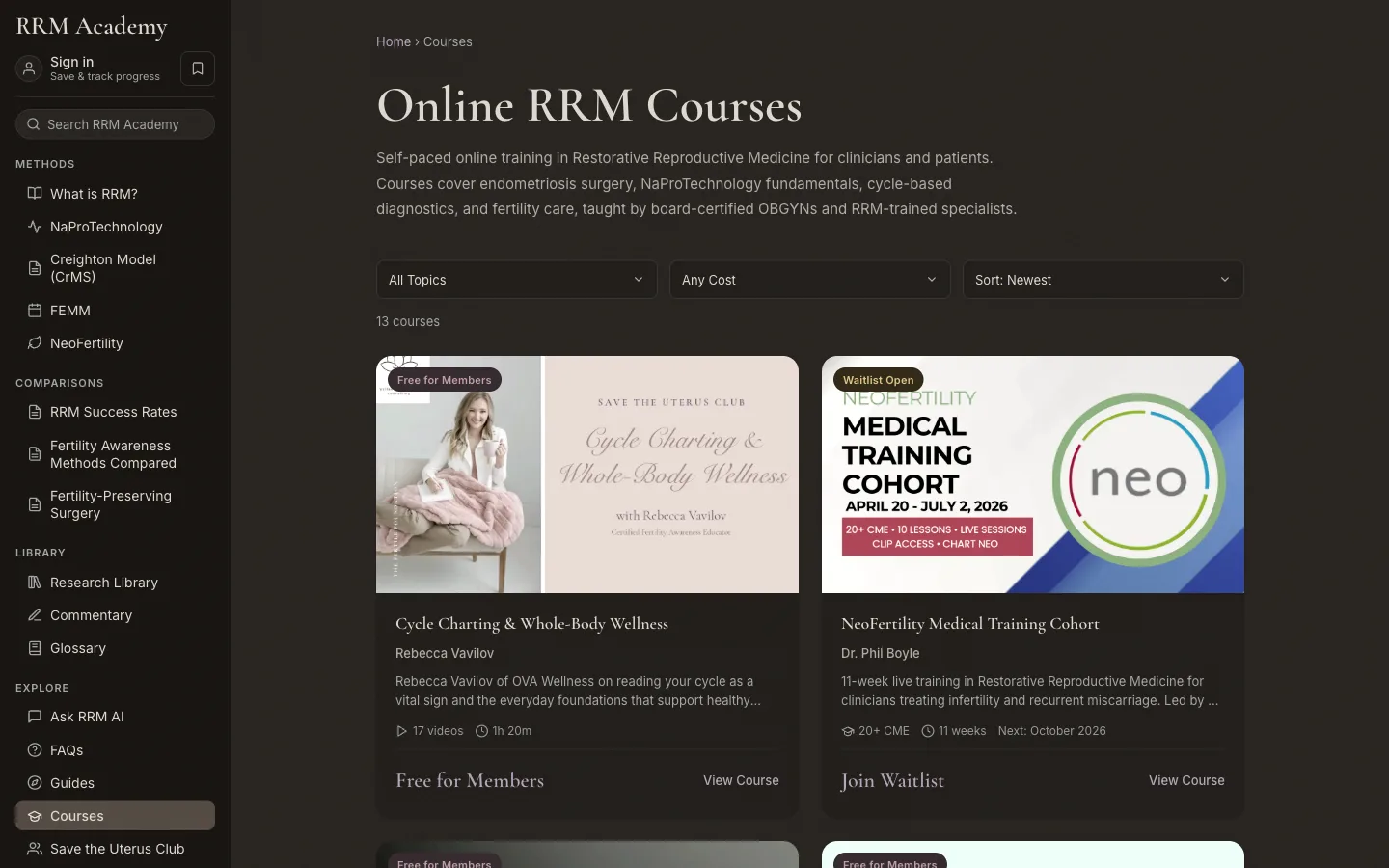
Training that equips clinicians to find and treat the root causes of women’s health conditions.
Explore the courses →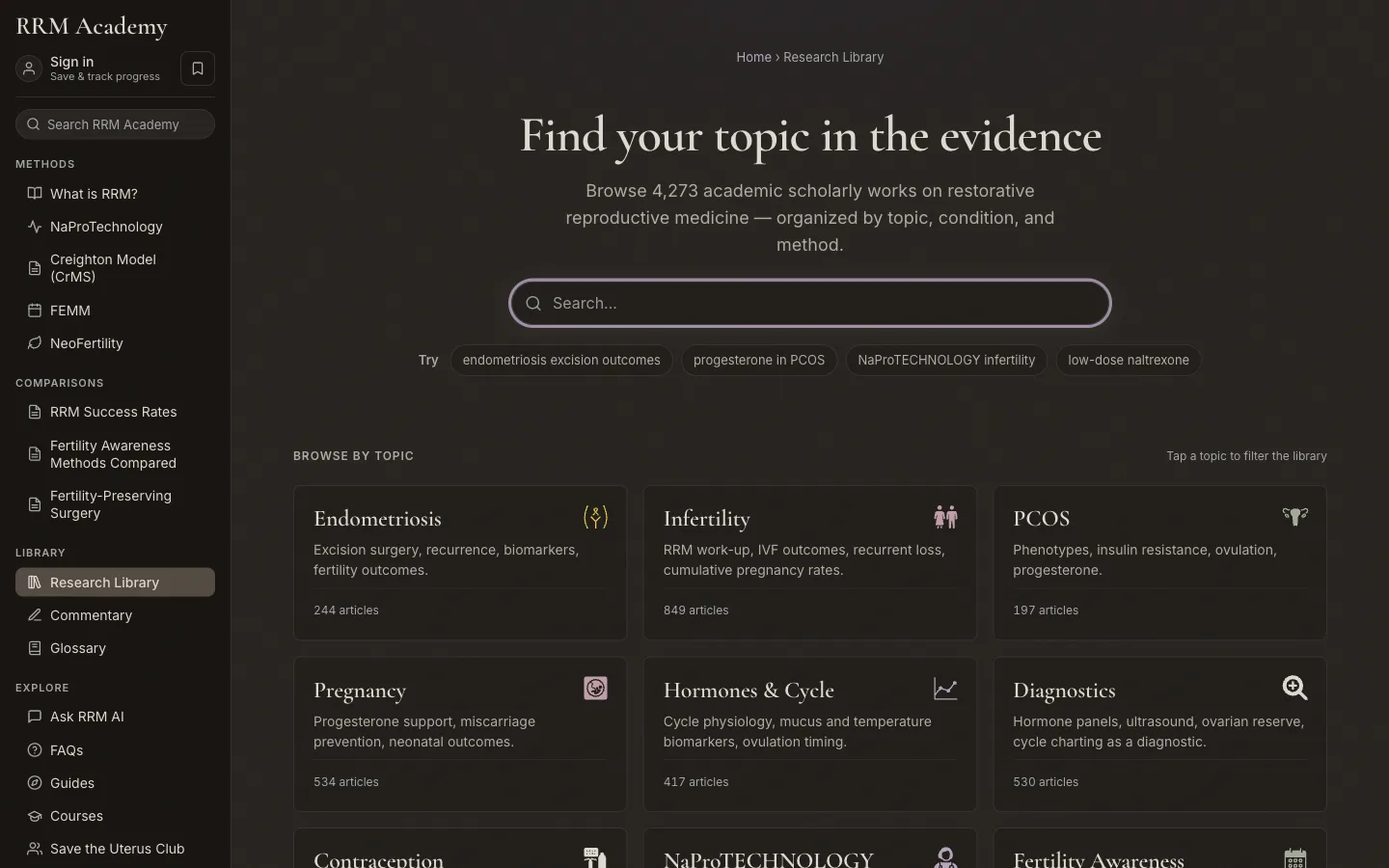
Peer-reviewed research on women’s health, organized by topic and condition, free for anyone to read.
Search the library →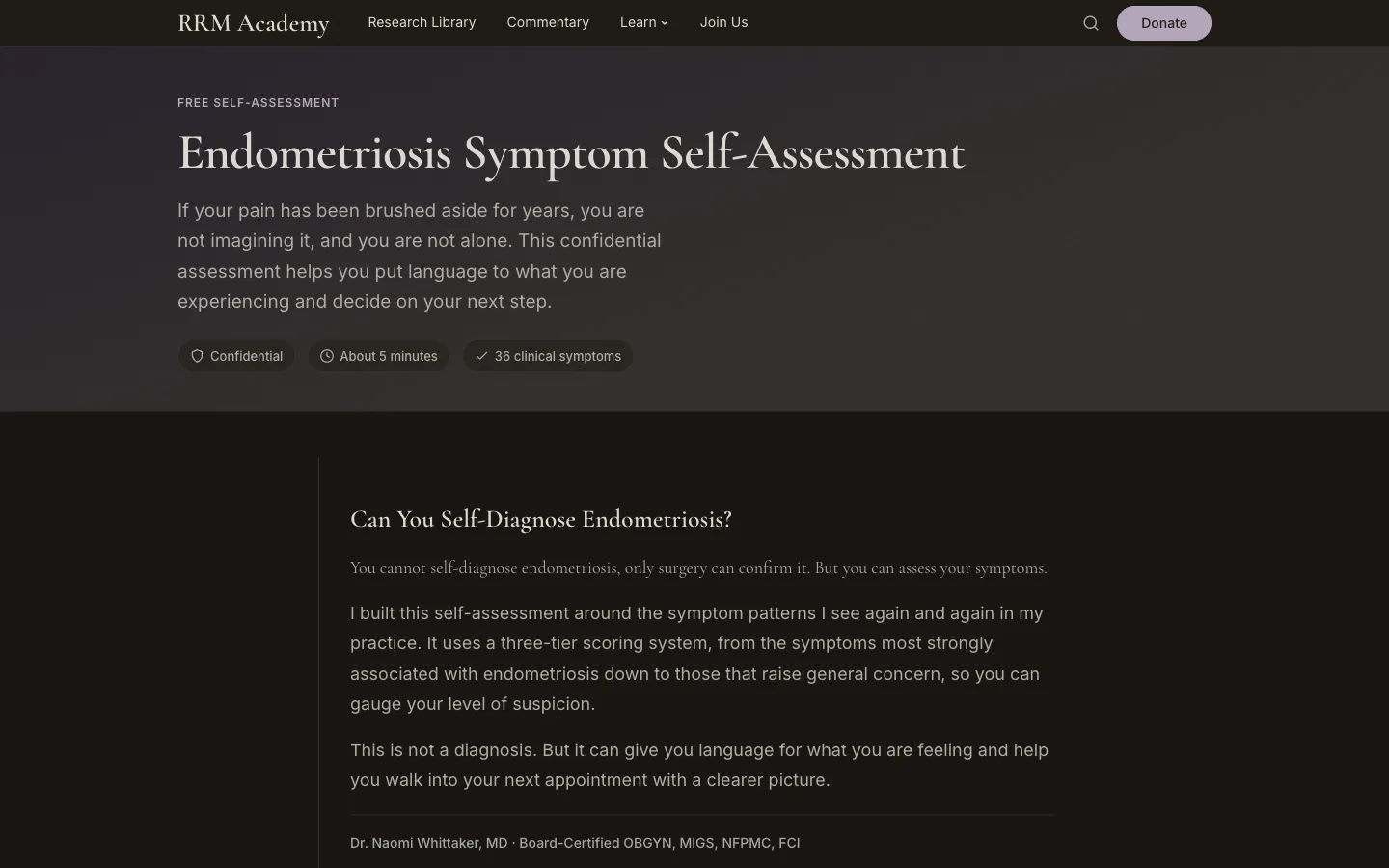
Free tools that help women put words to their symptoms and prepare for their next appointment.
Take the assessment →How the Foundation engages.
The Foundation builds these tools for its own programs and for partner programs under grants and collaborations. Use the contact form to start a conversation.